

20 Jun What Should I Know About Buying a Home with a Well and Septic System in Pennsylvania?
If you’ve spent most of your life in a neighborhood connected to public water and sewer, the first time you fall in love with a rural property in York or Lancaster County, someone is going to mention “well and septic.” You might nod along while quietly wondering what that means for you as a buyer.
It means more than most people expect. Not in a bad way, but in a “you need to know what you’re buying” kind of way. Here’s what we walk buyers through whenever a property has its own water and sewer systems.
First, Let’s Clarify What You’re Dealing With
A private well is exactly what it sounds like. It’s a drilled or dug well on the property that draws water from underground. There’s no water bill and no municipal supply. The homeowner owns the water quality and the well function entirely. The government doesn’t monitor it, doesn’t test it, and doesn’t send you a quality report.
A septic system handles sewage on-site instead of through a municipal sewer line. Wastewater leaves the house and flows into a buried tank. From there, it filters out through a drain field underground. Again, there’s no sewer bill and no municipal infrastructure. You own the maintenance.
Both systems are extremely common in York and Lancaster Counties. Plenty of wonderful homes in our market run on well and septic and have done so reliably for decades. We’re not trying to scare you off. We just want you to buy with your eyes open.
Water Quality and Flow Rate: What to Test and Why
When you’re under contract on a property with a well, test two things: water quality and flow rate.
Water quality testing checks what’s actually in the water. About forty percent of private wells tested by Penn State Extension come back with health-related issues. That doesn’t always mean something dangerous, but you’ll want to know either way. Properties in agricultural areas like Lancaster County should test for nitrates and pesticides specifically, since these contaminants show up often in shallow groundwater beneath farmland. A basic bacteria and nitrate panel runs about one hundred to two hundred dollars in Pennsylvania. A fuller panel covering metals, lead, radon, and other compounds runs higher, often three hundred to five hundred dollars.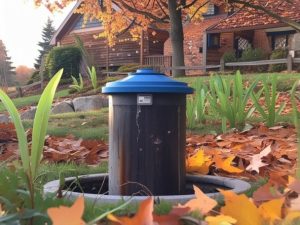
Flow rate testing measures how much water the well actually produces. FHA loans require a minimum flow rate of three to five gallons per minute for older wells. Even outside FHA financing, you want to know this number before closing. Nobody wants to discover a slow well after move-in day, usually right in the middle of laundry.
Pennsylvania is one of only two states with no construction regulations for private water systems, and forty-five percent of private water sources never get tested at all. Most parts of the state don’t legally require water testing at the time of sale. Still, nearly every experienced agent recommends it anyway. If you’re using FHA or VA financing, your lender will require it regardless.
Septic Inspections: What They Actually Cover
On the septic side, get a full inspection, not just a quick look at the tank lid. A thorough septic inspection evaluates the entire system, from the inlet all the way to the absorption area. These inspections in Pennsylvania typically cost three hundred to six hundred dollars, and most include pumping the tank as part of the process. That’s money you’d spend periodically anyway, so the inspection essentially pays for itself.
Here’s the honest part. Skipping the inspection to save a few hundred dollars can mean inheriting a failing drain field, and replacing one can run ten thousand dollars or more. We’ve seen it happen. It’s a painful way to start life in a new home.
The Pennsylvania Patchwork You Should Know About
One thing trips up a lot of buyers in our market: the rules aren’t uniform across the state. Septic regulation in Pennsylvania happens at the municipal level, not the state level. Every municipality has a Sewage Enforcement Officer, known as the SEO, who controls everything from site evaluation to installation inspection to point-of-sale requirements.
That means your township may or may not require a septic inspection at the time of sale. What’s required in one part of the county might not apply just three miles away in the next township. This is exactly why it helps to work with an agent who knows the area. We check township requirements as a normal part of the process, not as an afterthought.
The same patchwork applies to well water. Many municipalities require a water quality test before a home with a private well changes hands, while others leave it entirely up to the buyer. Whether your township requires it or not, we recommend building it into your offer as a contingency every time.
What Happens If Something Comes Back Wrong
This is the real question behind most of the nervousness around well and septic. The honest answer: it depends on what comes back and how serious it is.
On the water side, treatment options are generally available if a test comes back problematic, and they typically cost around eleven hundred dollars. In most cases, that’s a negotiating point, not a deal breaker. A more serious issue, like an aging well in poor condition, opens up a bigger conversation about remediation and who covers the cost.
On the septic side, a system that just needs pumping and minor upkeep is one thing. A failing drain field or a tank with structural problems is another matter entirely. That can turn into a price negotiation, a repair credit, or in some cases, a reason to walk away. That’s exactly why the contingency exists in the first place.
Sellers must disclose known well contamination, since it counts as a material defect under Pennsylvania’s disclosure rules. Pennsylvania treats this the same way it treats any other known defect. Sellers can’t be expected to disclose something they genuinely didn’t know about, which is exactly why you want testing done for your own peace of mind, not just taken on faith.
Questions Worth Asking Before You Make an Offer
A few questions are worth raising up front when you’re looking at a property with well and septic.
Ask how old the well is and when it was last tested. If records exist, great. If they don’t, budget for testing and possibly a professional evaluation of the well’s age and condition.
Ask how old the septic system is and when it was last pumped. A typical household should pump every two to three years. A seller who can’t remember the last service date is telling you something important.
Ask whether a water treatment system is already installed. If one exists, find out what it treats, when it was installed, and what the maintenance schedule looks like. A treatment system only works as well as its upkeep.
Ask whether the property has a sand mound. Sand mounds are a common alternative septic system in our area, used where the soil can’t support a conventional drain field. They work well when maintained, but they’re more visible and more expensive to replace, so it’s worth understanding upfront.

The Bottom Line
Buying a home with well and septic isn’t a red flag. It’s simply the reality for a large share of York and Lancaster County properties, and plenty of our clients live happily on both systems for decades. What matters most is going in informed. Get the inspections done. Understand what they find. Make sure your contract protects you if something unexpected turns up.
If you’re looking at a property with well and septic and aren’t sure what questions to ask or what your inspection results actually mean, that’s exactly the kind of conversation we’re here for. We’ve walked plenty of buyers through this. No pressure, no obligation, just a straight answer.

Susan and Kurt Johnston, REALTORS® — Iron Valley Real Estate of York County Serving York and Lancaster Counties and the Surrounding Susquehanna Valley Call/Text 717-965-7763 | Office (717) 316-8777 | johnstonhomes4u.com
No Comments