

13 Jun How Do Sellers Choose Between Multiple Offers — and What Actually Makes One Win?
You’ve done everything right. Your home is clean, priced well, and the photos look great. Offers start coming in — maybe two, maybe five — and suddenly you’re the one making a decision that feels a lot harder than you expected. Which one do you pick?
It’s not always the highest number. That surprises a lot of people, and honestly, it surprises some sellers too until they’re actually sitting at the table looking at a stack of offers. Here’s how it actually works.
Price Is the Starting Point, Not the Finish Line
Yes, price matters. Of course it does. But a high offer with shaky financing, a long list of contingencies, and a closing timeline that doesn’t work for you can cost you more than a slightly lower offer from a buyer who is rock-solid and ready to move.
When we review offers with our sellers, we’re looking at the full picture: the offered price, the type of financing (or whether the buyer is paying cash), the size of the earnest money deposit, what contingencies are attached, and how the requested closing date lines up with the seller’s actual life. All of those pieces interact with each other, and a weakness in one can offset a strength in another.
Financing Type Carries More Weight Than People Expect
A cash offer tends to rise to the top of the pile — not because cash is magic, but because it eliminates the appraisal contingency and removes the possibility that a lender kills the deal at the last minute. In York and Lancaster County, we do see cash buyers in certain price ranges, particularly in competitive situations or with investment properties.
 Conventional financing is the next tier. FHA and VA loans are absolutely legitimate and used regularly here — but they come with their own appraisal requirements and property condition standards that can create complications for certain homes. If a seller is aware their home has some cosmetic wear or deferred maintenance, an FHA offer may raise more questions than a conventional one. That’s not a reason to automatically reject it — it’s a reason to think carefully and ask the right questions.
Pre-approval letters are not all created equal, either. A letter from a local lender who answers the phone and knows the Pennsylvania market is worth more to an experienced seller than one from an online lender nobody has heard of. We can often tell a lot about how smoothly a transaction will go just by looking at who issued that letter.
Contingencies Are Where Offers Get Complicated
Every contingency in a contract is a door the buyer can walk out of. That’s not inherently bad — contingencies exist to protect buyers, and most of them are reasonable. But in a multiple-offer situation, sellers pay close attention to which doors are open and how wide.
The inspection contingency is standard and expected. Most sellers accept it without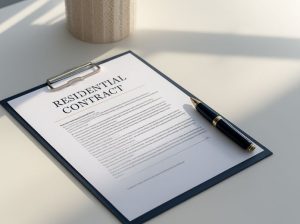 question. The financing contingency is also common and usually not a dealbreaker on its own. Where things get interesting is when buyers waive the appraisal contingency — meaning they’re committing to proceed even if the home doesn’t appraise at the sale price — or when they offer to cover any gap between the appraised value and the purchase price out of pocket. That kind of commitment signals a serious buyer and reduces the seller’s risk considerably.
A sale contingency — where the buyer needs to sell their own home first — is the one that gives sellers the most pause, especially if the buyer’s current home isn’t even under contract yet. It adds a layer of uncertainty that many sellers in a strong position will choose to avoid.
The Earnest Money Deposit Sends a Signal
In Pennsylvania, the earnest money deposit isn’t just a formality. It’s a signal. A buyer who puts down a meaningful deposit — something proportionate to the purchase price, not the bare minimum — is demonstrating that they’re committed and that they have skin in the game. When we see a thin earnest money deposit on an otherwise aggressive offer, we notice. Sellers notice too, once we walk them through what it means.
Here in York County, a deposit in the range of one to two percent of the purchase price is fairly common. Anything well below that on a competitive offer warrants a second look.
Closing Timeline Can Be the Deciding Factor
This is the one people underestimate the most. Sellers are people with lives — they may need time to find their next home, coordinate a move, or close on a purchase of their own. A buyer who is flexible on timing and willing to work with the seller’s schedule can win against a higher offer from someone locked into an immovable closing date.
We’ve seen it happen. A seller received two offers within a few thousand dollars of each other. One buyer needed a 30-day close, no flexibility. The other offered 45 days and a brief rent-back option if needed. The seller chose the second one without hesitation. It wasn’t about the money at that point — it was about peace of mind.
What This Means If You’re a Buyer
If you’re on the other side of this equation — submitting an offer and hoping to win — the takeaway is that you’re not just competing on price. You’re competing on the whole package. A clean offer with strong financing, reasonable contingencies, a meaningful deposit, and a closing timeline that works for the seller is genuinely competitive, even if it’s not the highest number in the pile.
Talk to your agent about what you can reasonably offer on each of those dimensions. Sometimes the difference between winning and losing has nothing to do with how much money you can spend.
Every Situation Is a Little Different
There’s no universal formula here, and we want to be honest about that. A seller with a tight timeline has different priorities than one who can afford to wait. A home in move-in condition attracts different buyers than one that needs some work. The market conditions in the neighborhood, the price point, and the time of year all factor in.
If you’re preparing to list and want to talk through how we evaluate offers — or if you’re a buyer trying to put together the strongest package you can — we’re always happy to have that conversation. No pressure, no obligation. Just an honest talk about what actually works.
— Susan and Kurt
No Comments